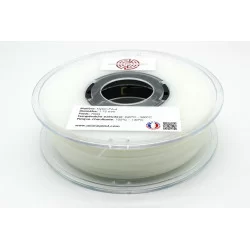
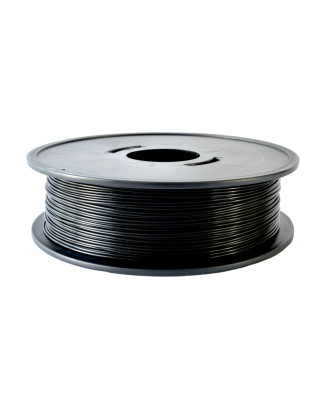
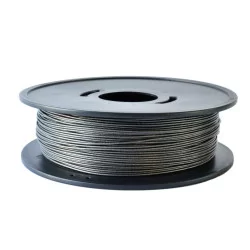
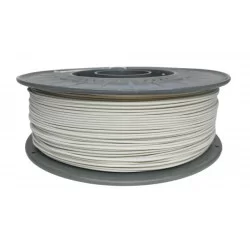
Explore the possibilities of filament 3D conductor Arianeplast
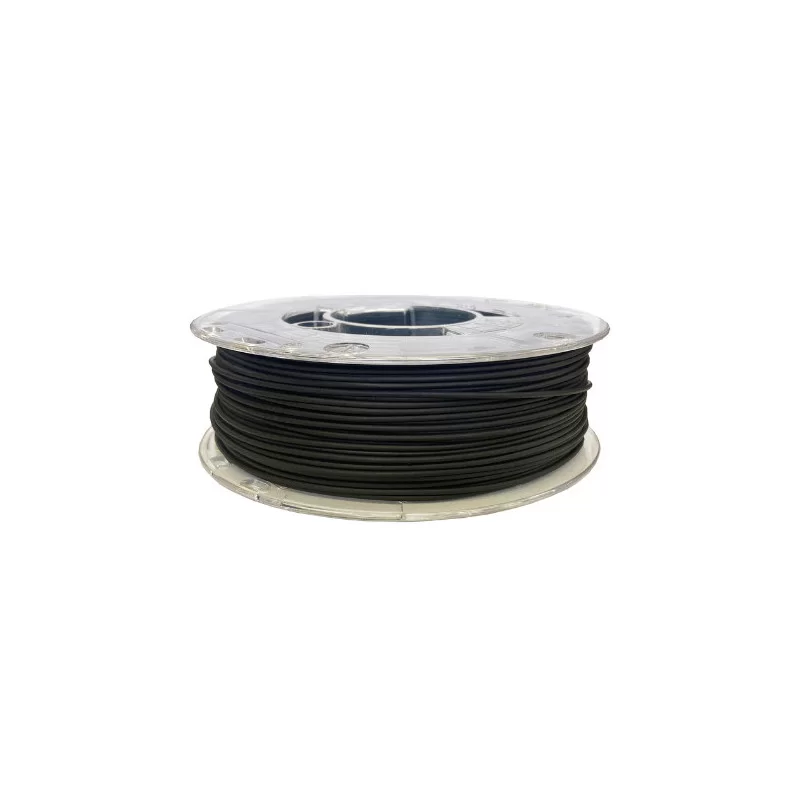
The filament 3D conductor ArianeplastIs a technical material designed to allow the realization of functional modules, of electronic prototypesAnd of connected componentsIn FDM printing. His formulation incorporates loads like the carbon or graphene, giving him properties of controlled conductivityWhile maintaining good print stability.
Made in France, this filament driver is thought for professionalsAnd advanced projects requiring at once mechanical resistance, , dimensional precisionAnd cONDUCTORY CONTINUITY. It is used on modules integrating electronic devices, sensors or simple circuits printed directly in the material.
Its implementation requires adapted parameters: precise adjustment of the temperature, adjustment of the printing speed, and use of a nozzle compatibleTo avoid wear problems related to loaded materials.
Develop functional parts with the filament 3D conductor Arianeplast
The filament 3D conductor ArianeplastIs designed to integrate a conductive function in printed modules, and not only a mechanical form. This material is for projects where the additive manufacturingBecomes functional: creation of electronic prototypes, integration of sensors, realization of simple circuits, or development of connected devices. The notion of room is no longer limited to form, but incorporates a logic of mastered electric transfer.
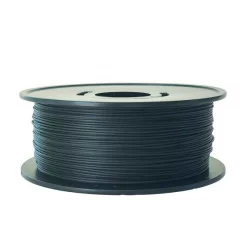
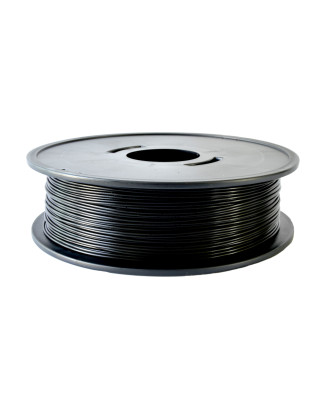
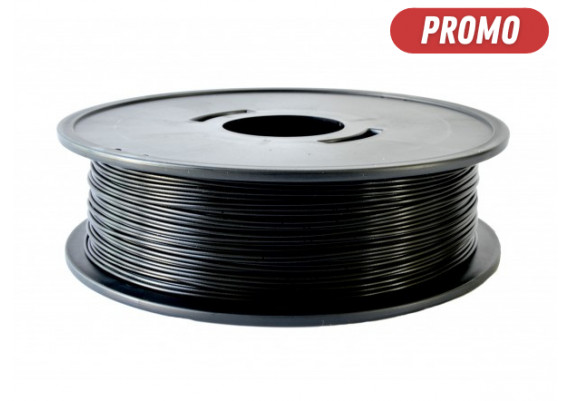
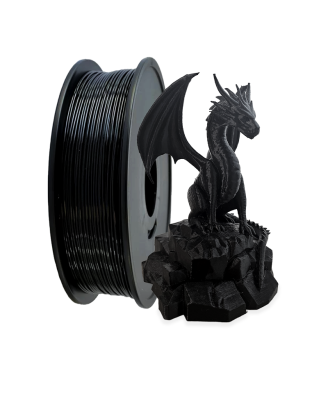
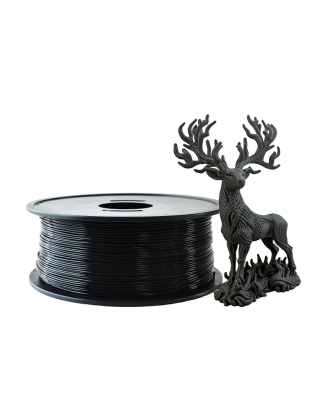
This filament is particularly used for black technical products, where the dimensional resistanceAnd manufacturing stability are essential. It allows to work on complex geometries without compromising continuity of conductive areas.
Access a solution to filament driver adapted to individuals and professionals
The filament 3D conductor ArianeplastIs designed to meet the needs of individuals curious of electronic projectsThat the requirements of prototyping or technical manufacturing professionals. It allows to realize functional print modulesAble to integrate a conductivity directly in the material.
For individuals, this type of filament opens the door to concrete projects like simple connected objects, circuit tests or educational prototypes. For professionals, it becomes a fast development tool for designing technical devices, elements integrating cONDUCTOR COMPONENTSOr complex geometries requiring a continuity of signal.
Exploit the potential of filament 3D driver for your technical projects
The filament 3D conductor ArianeplastIs designed to meet the needs of manufacturing functional modules integrating electrical properties. It can transform a classic print into a support capable of ensuring a controlled conductivity, useful for connected devices, prototypes or technical objects integrating components.
Thanks to materials loaded in carbon or graphnee, this filament acts on the resistivityAnd the conductivityFrom the printed piece, while maintaining good structural cohesion. It is particularly used in creating conductive lines, simple circuits or elements requiring interaction between several zones.
Technical materials adapted to the needs of professionals and advanced projects
Arianeplast proposes a basis of conductive filaments compatible with different materials such as the Technical PLA, PETG or flexible TPU, allowing to adapt the level of flexibilityOr rigidity according to the uses. The FILAFLEX type TPU, for example, allows to create flexible and connected products, while the reinforced PLA promotes dimensional stability.
These filaments are used in various contexts: rapid prototyping, tests of electronic components, manufacture of technical products, or development of innovative products. The choice of material depends directly on the constraints of mechanical resistance, flexibility and conductive continuity sought.
Printing settings and control of conductivity
The impression of a filament driver requires precise adjustment of machine settings. The temperature, the printing speedAnd the coolingDirectly influence the stability of the conductive line and the final quality of the room.
A nozzle adaptedIs strongly recommended, especially because of the presence of abrasive charges such as the carbon. A bad configuration can lead to clogging problems, a precision decrease or a variation of conductivity on certain areas.
The control of these parameters makes it possible to obtain reliable products, with a good dimensional precisionAnd a stable electric continuity, even on complex shapes.
One filament designed for the manufacture of functional and connected modules
This filament for users wishing to go beyond decorative printing to produce functional objects integrating conductive elements. It allows the manufacture of connected prototypes, sensor supports or structures integrating directly printed electronic zones.
The combination of mechanical resistance, conductive properties and adaptability of materials paves the way for industrial and research applications. The products obtained can integrate physical stresses while maintaining an integrated conductive function in the material.
All about 3D conductive filaments
The filament Does 3D conductive really make it possible to transmit electric currents ?
Yes, the filament 3D driver is designed with loads like the carbon or the graphene that gives it a partial conductivity. It does not replace a traditional cable, but allows to create conductive areas in a printed part.
What materials are compatible with the filament driver Arianeplast ? ?
The filament driver can be based on different families of materials like the PLA, the PETG or the flexible TPU. The choice depends on the use: rigidity for structural parts, or flexibility for deformable objects.
What are the recommended settings for print one filament driver ?
The printing requires precise parameters: a temperature adapted to the material, a moderate printing speed and a controlled cooling to stabilize the conductive line. A good configuration guarantees dimensional accuracy and more regular conductivity.
Did it be a nozzle specific for this type of filament ? ?
Yes, it is strongly recommended to use a nozzle strengthened because the conductive charges like the carbon are abrasive. A nozzle standard can wear more quickly and cause clogging or decline in performance.




 Secure payment
 Fast delivery
 Satisfied or refunded
 Shipped in 24/48h
 2-year legal warranty
 Official manufacturer website